iichiko Saiten: A New Direction for Shochu and for Cocktails
iichiko Saiten: A New Direction for Shochu and for Cocktails
iichiko is a powerhouse brand whose visibility extends beyond the shochu industry. Its clout as an alcohol beverage is growing worldwide, especially as mixologists increasingly showcase its potential. Adventurous drinkers, too, are discovering its standalone appeal. Its producer, Sanwa Shurui in Oita Prefecture, added to the momentum in 2019 with a promising new brand from the same legacy: iichiko Saiten.
As company representatives tell us, “It was created as a product with distinct appeal that can break into the mainstream of distilled spirits worldwide and stand on equal footing among the best of them.” Those are high aspirations—some might say quixotic—but Sanwa Shurui’s trajectory and success so far inspire faith.
In the first issue of the Whisky and Spirits Journal of Japan, we touched on Sanwa Shurui in our feature on TUMUGI, an intriguing cocktail base spirits line the company launched in 2015. Sanwa Shurui also produces sake (Wakabotan), wine (Ajimu), and other spirits, but shochu remains its calling card.
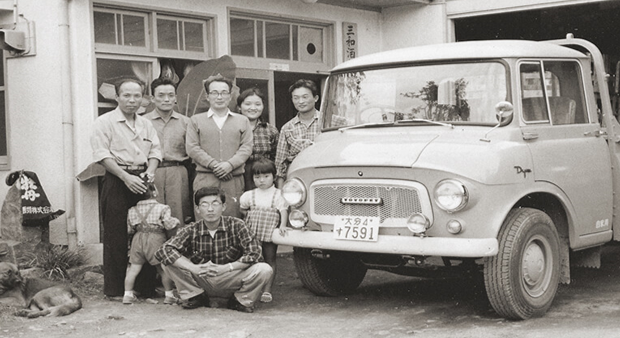
Let’s first review the company’s history before we delve deeper into its pursuit of global recognition. Sanwa Shurui formed in 1958 as three sake and shochu-making families in the small city of Usa entered a joint venture to build a bottling facility. Less than two years later, a fourth family joined, though the Sanwa Shurui name (meaning “three Japanese sake types”) remained unchanged. Two decades of operation then passed before its 1979 release of what would become the flagship brand, iichiko, roughly translated from the local dialect as “Isn’t this great?” For the company, it has been more than great.
In terms of overall shochu market share, iichiko is second nationally in Japan. For mugi (barley) shochu, it ranks first. Our own research indicates that the brand is the best-selling export shochu in the world and while company representatives say they are unable to confirm that for us, they do assert that they are the number one shochu import in the U.S., one of their most important overseas markets. Given the growing embrace of iichiko among the country’s food and beverage professionals, that’s easy to believe. Its other significant export destinations include Germany, Australia, Singapore, Vietnam, Taiwan, Hong Kong, China, England, Italy, and Canada—there are thirty countries in total.
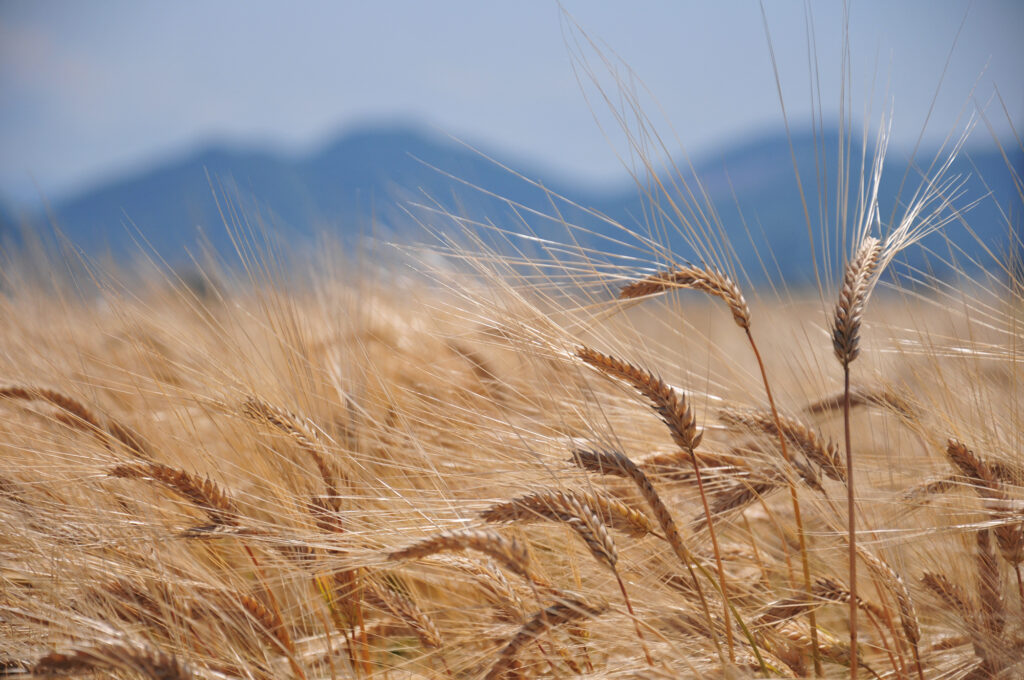
An interesting note about Australia is that Sanwa Shurui also sources a significant amount of barley from the country. But the barley they proudly highlight is a local one grown in Oita called Nishi no Hoshi (Western Star). Typically, mugi shochu producers don’t simply use whatever barley is available. The preferred barley is two-row and typically demonstrates certain characteristics like large grains with ample starch that make it more amenable to good fermentation.
Barley is cultivated throughout Kyushu, but Oita is a key production area, along with Iki Island, off the coast of Nagasaki in the direction of Korea. Iki Island is actually small (138 square km/53 square miles); its claim to fame is more historical than one of volume. The island is considered the birthplace of mugi shochu, owing to draconian tax systems in the 17th century that left local farmers with little rice and plenty of exempt barley for food and liquid experimentation.
Most historians assert that distilling techniques arrived in Okinawa from mainland Asia in the 15th century and spread to Kagoshima in the 16th; however, there are some that also suggest distillation technology also came to Iki via the Korean Peninsula around 500 years ago—a plausible claim that the well-established Okinawa route could accommodate. Either way, mugi shochu production eventually spread to the larger island of Kyushu, home to Oita Prefecture.
The next major historical inflection point in mugi shochu’s history, going back to the 1970s, owes in fact to two Oita producers: Nikaido and Sanwa Shurui. In 1974, Nikaido launched a 100% mugi shochu line that generated considerable consumer enthusiasm until Sanwa Shurui followed suit. The industry as a whole widely credits these companies to a national shochu boom and an enduring change in shochu appreciation. For iichiko in particular, what led to its meteoric rise? The answer is partly shrouded in secrecy.
While Nikaido employed vacuum distillation for its shochu, iichiko further differentiated itself by using a blend of several several distillates. That convoy of four families, it turns out, had an unlocked destiny to fulfill. The thing is, their blending formula is a secret.
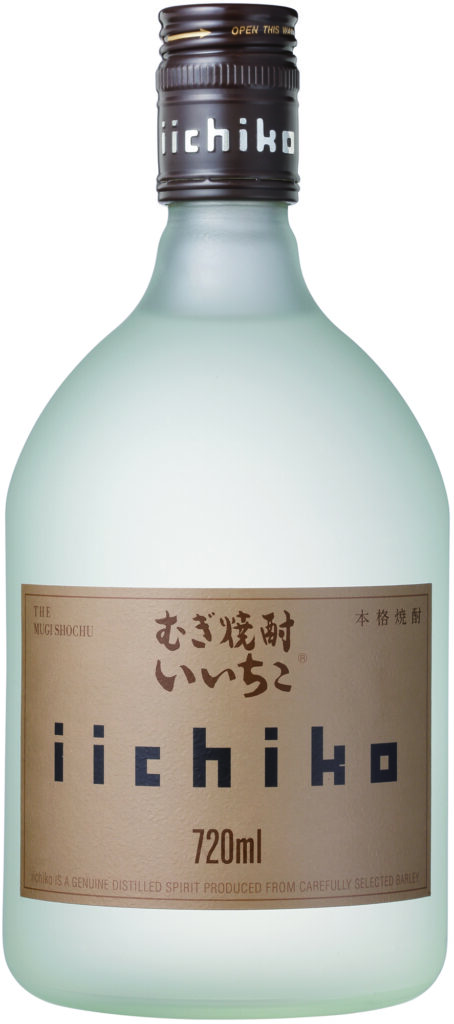
1979, when Sanwa Shurui burst onto the scene, was also a transitional year for shochu because of regulatory changes in the industry that introduced the official designation honkaku shochu. “Honkaku” gives the sense of “authentic” and the designation refers to traditional, single distillation shochu. It must use approved fermentation ingredients (there are more than fifty), be made with koji, and, following distillation in a pot still, have an alcohol by volume measuring 45% or less. Koji, for those unfamiliar, is a saccharifying ingredient. Yeast processes glucose to create alcohol, but barley (and rice) contains a lot of starch, rather than glucose, requiring conversion. Enter koji mold (aka Aspergillus oryzae), which is sprinkled on steamed rice or barley to kickstart the process. To return to our industry term, Sanwa Shurui’s iichiko is a honkaku shochu and the fortuitous timing of its release meant that in the minds of many it became synonymous with authentic shochu—a standard bearer, if you will, of this new category of a traditional Japanese beverage.
In the decades since, Sanwa Shurui has released quite a number of iichiko expressions. Some fairly recent ones in addition to Saiten include Silhouette, Frasco, and Kurobin. These expressions similarly use different blends of the company’s various mugi shochu recipes. While they employ 100% barley, the distillery facilities have introduced a broad range of flavor and aroma through experimentation with different stills, maturation techniques, fermentations, yeast strains, and more. As a result, iichiko has remained relevant and exciting, and certainly one of Japan’s most iconic brands.
iichiko's Place in Popular Drinking Culture
These are the basic outlines of Sanwa Shurui’s history and how iichiko became etched in Japan’s popular drinking consciousness. For more insight on the thinking and culture behind the brand, we spoke at length with Tetsuro Miyazaki. While he’s currently Manager of the Global Marketing Division, he was previously the General Manager of iichiko in the U.S., where he spent many years helping propel the brand to popularity and witnessing firsthand its embrace by mixologists. Given shochu’s longevity in Japan, not to mention the contemporary popularity of brands like iichiko, it’s easy to assume that it’s good simply because it is.
When asked to give specific reasons why, Miyazaki explains,“The charm of honkaku shochu is, without a doubt, that it showcases the distinct character of its ingredients. Put another way, the differences between its various base ingredients—barley, rice, sweet potatoes, and brown sugar, among others—find rich expression in the flavor, allowing you to savor the unique taste and aroma of each.”
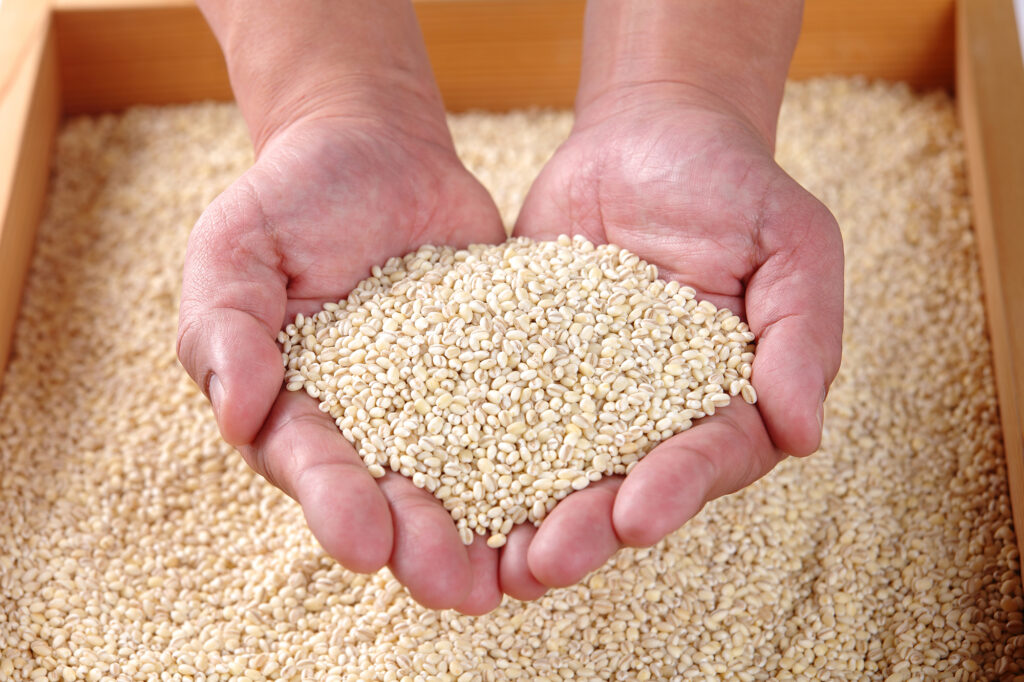
Miyazaki also highlights the use of koji in this distilled beverage. It’s a component that’s perhaps too often overlooked outside of its role in the production process itself.
“Koji, which thrives in Japan’s environment, is essential to the fermentation process, lending distinctive depth and umami to the drink. Through koji’s properties, we get multiple parallel fermentation, whereby saccharification and fermentation happen simultaneously. The resulting alcohol content after fermentation reaches roughly 18%, which is on the higher end. The alcohol content of the fermented mash of other spirits—including most whiskies, for example—typically tops out at 10%. That’s why multiple rounds of distillation are necessary, whereas authentic shochu is produced via a single distillation. That allows more of the flavor and aroma of the original ingredients to remain in the liquid. In the end you naturally have more depth of flavor.”
The reference to Japan’s “environment” is an interesting one. The corresponding word, fudo, references the climate, the soil, water qualities, and other variables. It gives the sense of terroir, to use the common wine term, whereby characteristics of all these things are reflected in the flavor and are unique to the locale. There’s some mild controversy over use of the term in the context of sake or shochu. If the raw materials (like rice or barley) are imported from some other region, then the flavor isn’t totally representative of the terroir, but sake and schochu producers alike will often make an effort to source and produce locally, in part or whole. Sanwa Shurui certainly leans into this with use of its local barley, and the production of its koji and distillates locally.
Honkaku shochu thus often reflects the local environment and culture—the agricultural traditions and distilling techniques that developed there. You are literally tasting, in Yamazaki’s words, “the personality of the land.” Shochu isn’t simply an alcoholic beverage, but a liquid museum of Japan’s intangible culture and natural riches. As a classic representative of honkaku shochu, iichiko gained footholds in overseas markets as noted above, but Sanwa Shurui of course wanted to push further.
Miyazaki notes, “Shochu has mainly been a drink enjoyed together with meals, particularly at izakaya. Our iichiko Saiten brand sought to evolve from there and expand into new markets. We conceived of it as a beverage that can compare with other top spirits around the world, gaining favor in the mainstream through its own unique appeal.”
The realization that such a brand would be key to their aspirations came in part through their market activity in the U.S. According to Miyazaki, during his time as GM in the U.S., they focused their sales efforts on izakaya and Japanese-style restaurants, but soon realized that drinking culture was quite different from Japan’s.
“In Japan, people enjoy just about anything with their meals—sake, shochu, whisky, highballs, gin highballs, umeshu, and beer,” says Miyazaki. “But in the U.S., the types of drinks consumers typically enjoy with their mails are brewed, like wine, beer, or maybe sake. Well, shochu is distilled so it’s categorized with other spirits. In the U.S., those are more often consumed in bars, not at restaurants with meals.”
The conclusion they came to, of course, was that they should endeavor to introduce iichiko to the bar scene, and that this could more effectively alter the course of shochu internationally as well. Sanwa Shurui then formed a product team and made numerous market visits to the U.S., some of which included the company president (we can’t blame him for wanting to see the bar scene firsthand). As an interesting side note, the presidency of Sanwa Shurui rotates among the four families that established the company.
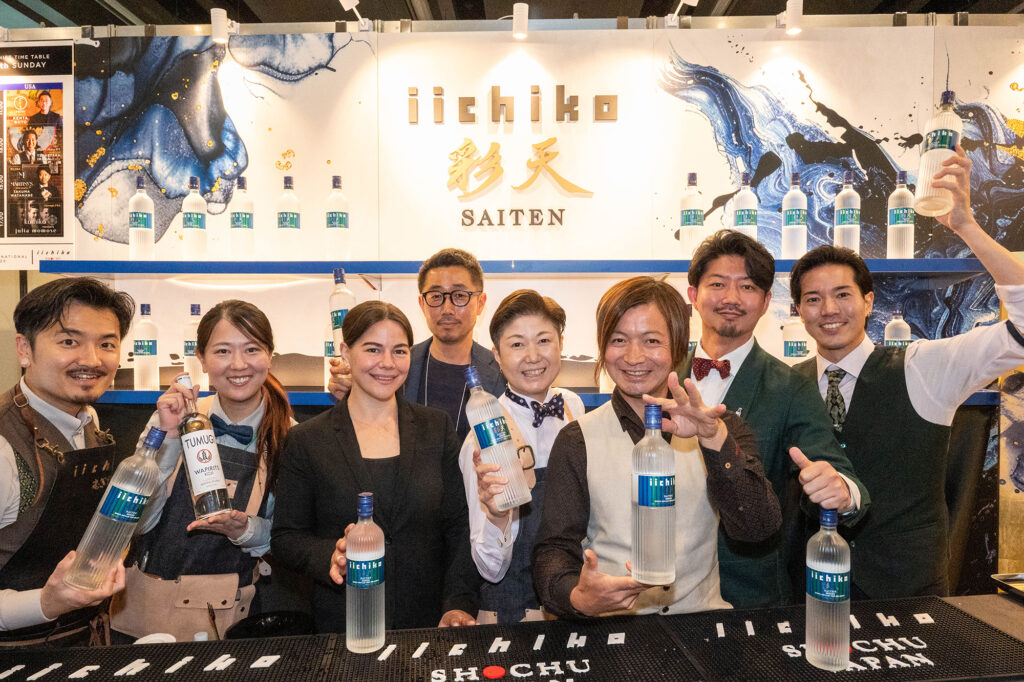
For their market research, the team invited top bartenders from across the U.S. to participate in multiple tasting sessions of their prototype products. Their feedback was valuable and thus incorporated into subsequent iterations. The final result was an iichiko expression that proudly exemplified Japan’s koji-based distillation tradition while at the same time demonstrating character that shined in cocktails.
The cultural differences the team noticed when they began the Saiten journey became even more nuanced as time passed. In Japan, lower-alcohol cocktails are more common, while in the U.S., they discovered that cocktails were both stronger and more robust in flavor—an aspect of drinking culture that generated considerable interest among the team. This encouraged them to develop an iichiko expression that could assert itself even against that flavor backdrop.
Traditional shochu ranges from 20% to 25% alcohol content, but iichiko Saiten is a whopping 43%. So that the umami of the koji would be fully expressed, they very consciously made a barley koji for a 100% koji mash. This is the zen-koji (literally, “complete koji”) brewing method, touched on originally in our article on TUMUGI.
Miyazaki explains, “The base spirit is distilled at atmospheric pressure to extract rich, roasted notes in the aroma. We also carefully selected a yeast strain that is well suited for each individual base spirit. Through our blending of these distinctive base spirits, we achieved a rich flavor profile with considerable depth.”
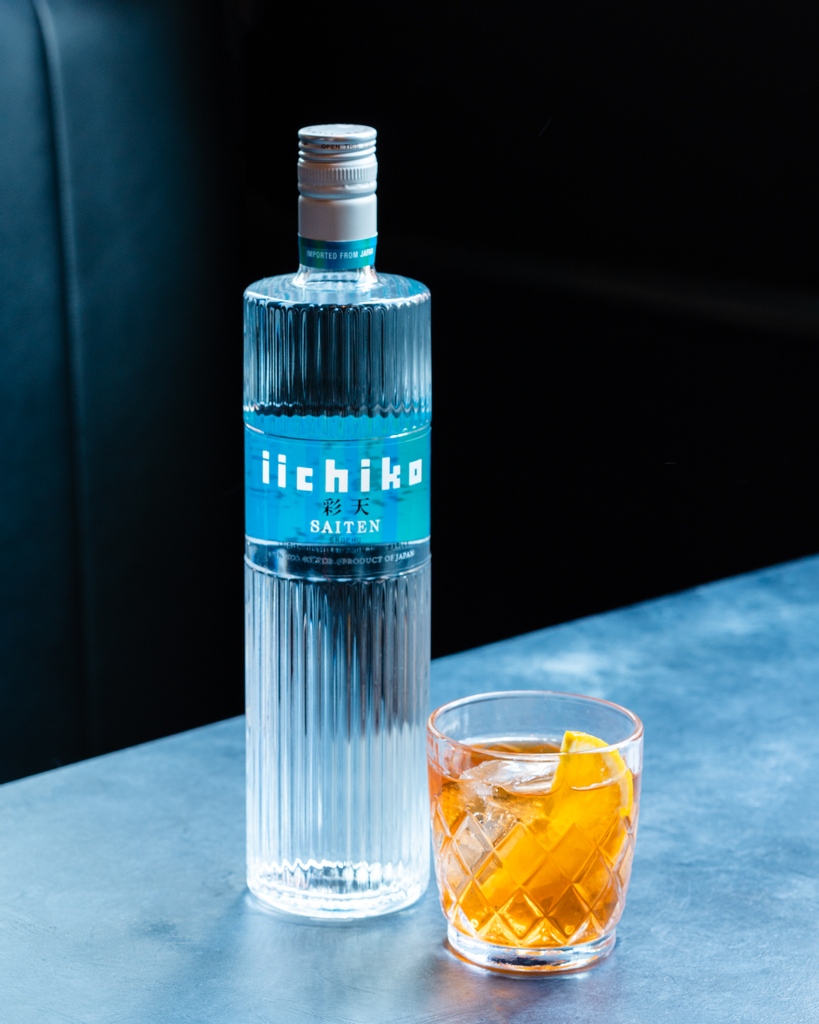
Although iichiko Saiten is leading the charge right now, Miyazaki hopes that top bartenders around the world more broadly discover and experience the excellence of honkaku shochu. In the world of wine, he notes, sommeliers tend to be the trend-setters, but with spirits, it’s the mixologists who are innovating and creating the culture. And through them, consumers will hopefully discover iichiko Saiten. Imagine for a moment honkaku shochu on bar shelves around the world, as common as whisky, rum, gin, or vodka. That’s the goal.
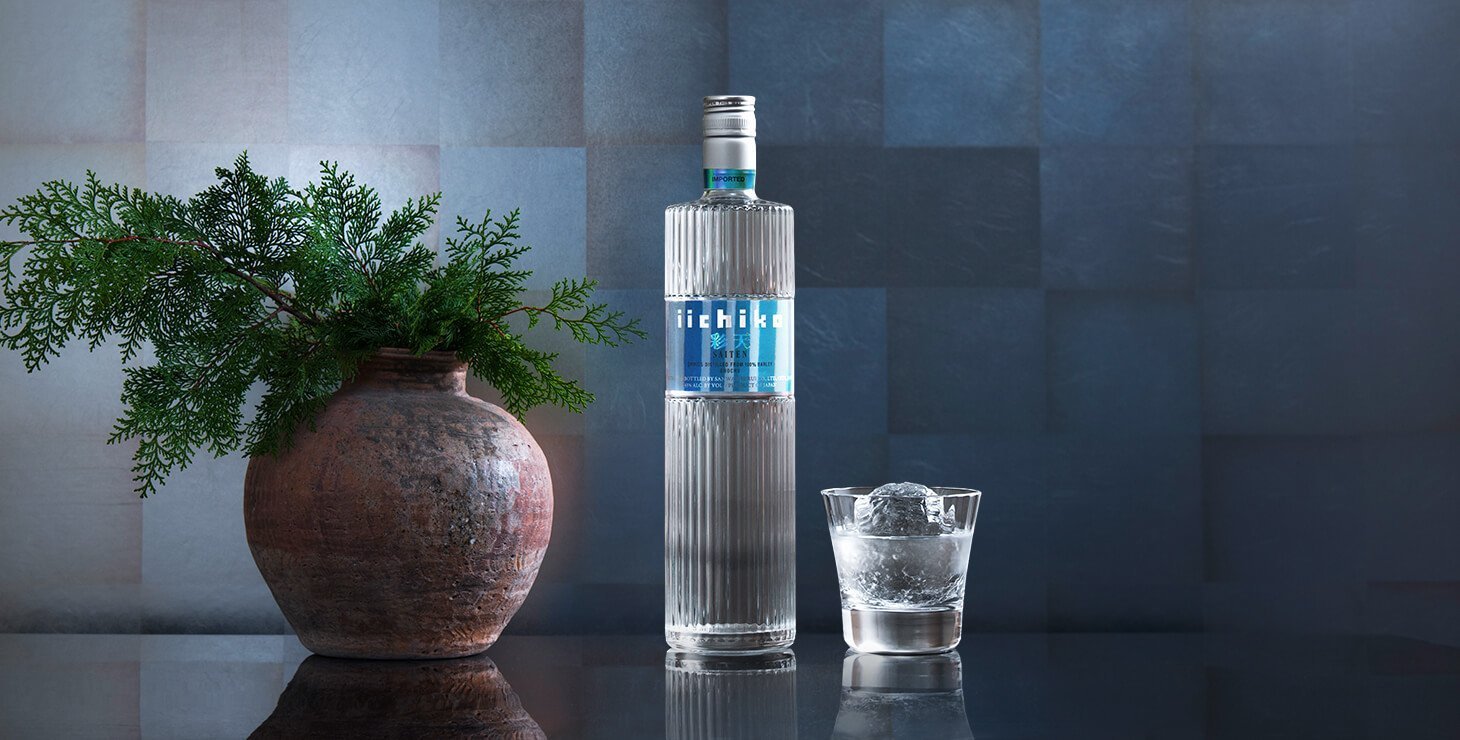
The striking bottle design, according to Miyazaki, was inspired by the image of a Japanese woman in a kimono. The label design is reminiscent of the obi (sash) of a kimono. Their goal was to express “Japanese beauty” that merged aspects of traditional aesthetics with contemporary taste such that it would additionally stand out when displayed.
Besides feedback from those initial tasting sessions with mixologists when Sanwa Shurui was developing Saiten, other bartenders have commented on its unique flavor. It is quite distinct from other spirits and distilled beverages due to the umami that derives from koji. In cocktails—at least many of the recipes developed so far—it yields a smooth, rounded aftertaste and lingering finish. It’s also grain-forward, which long-time fans of Sanwa Shurui’s products note is somewhat unusual.
Most of Sanwa Shurui’s export markets have had to wait for iichiko Saiten. In addition to the U.S., it has only been available in select markets like Singapore, Hong Kong, and Australia. As of this summer, it is also finally available in Japan following several launch events in Fukuoka, Osaka, and Tokyo where bartenders brought in from around the world unveiled their creations to lucky guests.
Miyazaki notes, “We hope that iichiko Saiten will be enjoyed in bars, as it is in the U.S. and our other overseas markets. While honkaku shochu has not been traditionally served in Japanese bars, there is a growing trend among younger bartenders in particular of creating cocktails with it. We want people to recognize that shochu is not only delicious, but can make for a classy drink in the cocktail world, too. We want bartenders to see honkaku shochu as a Japanese spirit they can be proud of.”
Given the star power of the bartenders in attendance, including Shingo Gokan (whom we featured in our first issue), it seems like only a matter of time before this company ambition is realized. Just as 1979 marked a watershed moment in the company’s history, could 2025 become yet another? Consumers will determine that and the buzz from the launch events indicate that possibility grows with every Saiten cocktail enjoyed. Time to enjoy (or create) your own!

MARS
Hombō Shuzō
Makers of Mars Whisky
Text and photos by Brian KowalczykTranslation by Mayura Sugawara and Shinsuke Miyamoto
こちらはThe Whisky & Spirits Journal of Japan 第二号に掲載のMARSの特集記事の日本語版だ。
This is a Japanese translation of the feature article about MARS in issue 2 of the Whisky & Spirits Journal of Japan, which is published in English. The quotes of those interviewed, however, are their original answers in Japanese. If you’d like a copy of the magazine, you can order it here.
マルスの信念は素晴らしく一貫しており、社長、ブレンダー、施設管理者の誰と話しても変わらない。全員が同じ方向を向き、世界クラスのウイスキーをつくるという目標に一致団結している。組織の誰と話しても、自分の仕事を心から楽しんでいる様子が伝わってくる。彼らの情熱は明らかだ。多くの主要メンバーが、新卒でマルスの製造元である本坊酒造株式会社に入社し、数十年にわたって働いている。それも当然かもしれない。人々から絶賛される製品を生み出し、自分たちもそれを飲むことを楽しんでいるのであれば、他に行きたくなる理由はないだろう。
マルスが最も重要視しているのは、自然環境や季節ごとの気候がウイスキーに与える影響である。これがマルスの成功の秘訣だと考える人もいるかもしれないが、社員たちは包み隠さずに、これこそが現行の蒸留事業のビジネスモデルの基盤となっていると教えてくれる。施設内にはその考えを伝える掲示がいくつもあり、見学者が理解を深められるように詳細に説明されている。
マルスが特に強調しているコンセプトの一つに「2つの蒸溜所、3つの貯蔵庫」がある。マルスのウイスキー人気が高まる中で、この数字が今後調整される可能性はあるが、現時点では新たな施設の追加に関して公式発表はない。現在、鹿児島県南さつま市にあるマルス津貫蒸溜所と、長野県の駒ヶ根にあるマルス駒ヶ岳蒸溜所で蒸留と熟成の両方がおこなわれている。3つ目の拠点は、鹿児島県の屋久島にあり、こちらは焼酎製造施設ではあるものの、ウイスキーの熟成センターとしても機能している。これら3つの拠点はどれも雄大な自然に囲まれ、それぞれの気候の違いがウイスキーの熟成に大きく異なる影響を与えている。
前述の点を踏まえ、今回の取材では3つの拠点を実際に訪れ、同社の信念の背後にある具体的な要素を直接理解することにした。それぞれの拠点が、最終的な製品にどのような影響を与えているのか探っていきたいと思う。
本坊酒造の歴史
まず最初にマルスブランドの歴史を見ていきたい。マルスの製造元である本坊酒造の始まりは、鹿児島県南さつま市の1872年まで遡る。この年、本坊松左衛門が製綿業を開始し、その後、菜種油製造業も始めた。彼は7人の息子と3人の娘を持つ野心的な家族の家長だった。1909年には上から3人の息子たちが焼酎の蒸溜所を設立し、その後、他の兄弟もさまざまなビジネスを立ち上げていった。南九州の気候は米の栽培には適していないため、日本酒造業は根付かなかった。その代わり、さつまいもはこの地域の主要な作物であり、焼酎の原料として使用されるなど、鹿児島の歴史において大きな役割を果たしてきた。鹿児島県は日本国内でも焼酎の生産量が圧倒的に多いトップ生産地だ。1928年には、松左衛門の勤勉な息子たちが本坊合名会社を設立し、これが後の本坊酒造株式会社となる。同社を含む本坊グループは幅広い事業を展開しており、その多くがアルコール飲料、主に焼酎、ワイン、ウイスキーに関連している。
20世紀初頭に始まった焼酎事業は成功を収め、1949年にはウイスキーの製造免許を取得した。現在の社長である本坊和人は「当時の社長がなぜウイスキーを生産することに決めたのかは私も聞いていません。当時は第二次世界大戦後で、この場所も一度空襲で焼け野原になりました。焼け焦げた廃墟でした。その悲劇から再建する中で、国内市場における海外由来のアルコール飲料の可能性を見越していたと思います」と語る。彼はしばらく考えてから、「当時、工場には本格的なポットスチルはありませんでしたが、それでもウイスキーを生産し、ブランド名を『ゴールデン・スター』として販売していました。マルスという名前ではありませんでした。私たちの焼酎はもともと『ホシ(星)』と名付けられていましたが、『タカラボシ(宝星)』に変更されました。その頃のウイスキーの品質については不明です」と付け加えた。
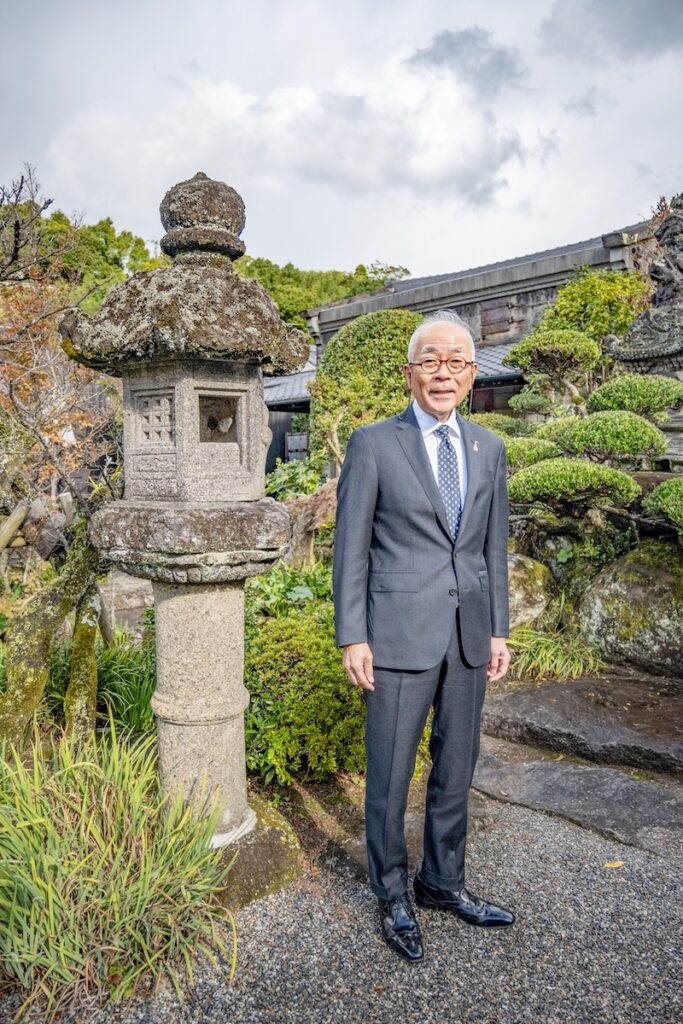
和人社長によると、三代目社長の本坊豊吉は非常に社交的な人物だったという。国際経験が豊かで、南九州コカ・コーラボトリング株式会社の設立に携わった。グローバル市場での経験から、彼は本格的なウイスキーの蒸留を目指し、1960年には山梨でワイン製造免許を持つ会社の買収を主導した。そしてその年、本坊酒造は鹿児島のウイスキー製造免許を山梨の施設に移転させた。翌年には、豊吉が代表取締役に就任し、これらの取り組みをさらに進めていった。これがマルスブランドの起源である。物語は再び鹿児島に戻るが、まずは本州中央部でのウイスキー製造と、岩井喜一郎氏(1883–1966)の登場について触れたいと思う。彼はマルスウイスキーの父と知られ、日本のウイスキー業界の発展に大きな影響を与えた人物である。
本坊
酒
造
マルスの父
岩井喜一郎は1945年に本坊酒造の顧問に就任した。すでにその時、彼は日本のウイスキー業界で広く知られる存在であった。大阪高等工業学校(現在の大阪大学)の醸造科を卒業した彼は、1909年に酒造メーカーの摂津酒精醸造所に入社した。彼はその後、同社の常務取締役兼主任技術者となる。同じ大阪の醸造学校に通っていた竹鶴政孝も、先輩である岩井のネットワークを通じて1916年に摂津酒精醸造所に入社した。
ウイスキー業界に詳しい多くの方がご存知の通り、竹鶴は山崎蒸溜所(現在のサントリーウイスキー)で初代の蒸留責任者を務め、その後1934年には北海道の余市にニッカウヰスキーを設立した。日本のウイスキー業界で最も有名な人物のひとりとなる前、竹鶴は1918年に岩井の指示でスコットランドに派遣され、ウイスキーの本場で学んでいた。彼の持ち帰った膨大な量の情報が書き込まれたノートは、発展途上にあった日本のウイスキー業界にとってのバイブルとなり、最終的に岩井はそれをマルスのポットスチルの設計に活用した。
岩井の娘は七人兄弟の末っ子である本坊蔵吉と結婚した。その縁がきっかけで、岩井は摂津を退職後、本坊酒造に就職することとなった。1949年の鹿児島での初の蒸留は岩井の指導のもとでおこなわれた。1960年には、同じく彼の指揮のもと、山梨の施設で竹鶴の詳細なノートを参考にしながら、彼自身が設計したスチルを使って本格的なウイスキー生産が始まった。そこでの蒸留は、岩井が亡くなった数年後の1969年まで続いた。その後、山梨の施設はワインの生産に専念するようになり、ウイスキーの蒸留拠点は再び鹿児島の施設に移された。鹿児島の施設はその後、2つ目の蒸留免許とブランデー製造に使用されていた小型スチルを取得した。
同社は市場の変動に左右されながら、断続的な生産の時期を経て、2010年頃にようやく安定するようになる。鹿児島でのウイスキー生産は1984年に終了し、翌1985年には山梨の使われていなかった蒸留免許と岩井の設計したスチルを活用し、長野県宮田村に新しい蒸溜所が設立された。この蒸溜所はこれまで「マルス信州蒸溜所」として知られていたが、現在は「マルス駒ヶ岳蒸溜所」となっている。ここでの蒸留活動もまた、1992年に日本のウイスキー販売に悪影響を及ぼす酒税法の改正を受けて、一時的に長期休止されることとなる。国内のウイスキー業界は、この税制改正の影響を受けて約20年にわたり苦境に立たされた。売上を回復させるために、サントリーは2008年に角ハイボールのキャンペーンを開始し、大成功を収めた。同年、サントリーとニッカはワールドウイスキーアワードにて受賞をし、世界的な人気を得たことで、日本全体のウイスキーに注目が集まった。この市場の変化を受け、2010年にマルスは長野での蒸留活動を復活させるプロジェクトを開始した。そして、新作のウイスキー「THE REVIVAL 2011 シングルモルト駒ヶ岳」が2014年に発売された。
長期の蒸留休止期間中も、彼らは保管していた多くの樽を利用し、断続的に商品をリリースしていた。2013年のワールドウイスキーアワードでは、長野で25年熟成し、鹿児島でさらに3年熟成された28年物のウイスキー「マルスモルテージ 3プラス25 28年」が、ブレンデッドモルト部門にて世界最高賞を受賞した。この受賞によりブランドの知名度は上がり、売上も伸びていった。この賞の受賞と同等に、ブランドの将来にとって重要だったのは、異なる場所で熟成をおこなうというコンセプトが形を見せ始めたことであった。
ブレンディングマエストロ
先述の通り、自然環境と気候はマルスの成功にとって必要不可欠な要素であった。しかし、有能な指揮者がいなければ、それらの要素はあまり意味を持たないだろう。マルスで指揮を執るのは、常務取締役兼チーフブレンダーの久内ーだ。彼は本坊酒造に40年間勤務している。
久内は、アルコール飲料と会社の歴史に関する生きた百科事典のような存在だ。経験豊かな教授が自分の好きなテーマについて講義するかのように、数字や日付、事実を次々に語る。かといって偉そうなところは一切なく、むしろバーで何時間も話し続けていたいと思わせるような親しみやすさがある。彼は多くのことを共有してくれ、その話は非常に引き込まれるものだった。時折、「待って、もしかすると非公式な情報を話しすぎているかもしれない」と話を止めることもあるが、自分の天職について語るとつい夢中になってしまうようだ。
そんな久内がこの道を歩み始めた経緯を辿ってみたい。彼の父は山梨出身であったが、海上自衛隊に所属していたため、家族と共に日本全国を転々としていた。退職後、父は故郷である山梨に戻ることを目指していたため、若き日の久内は山梨での進学を決め、発酵科学を学ぶため山梨大学に入学した。山梨は長年にわたり日本の主要なワイン生産地として知られており、久内はその業界に入るための学位取得に興味を持ったという。1983年に卒業後、久内は本坊酒造のマルス山梨ワイナリーでキャリアをスタートさせた。このワイナリーは、同社が1960年に購入した土地にあった施設である。
久内が入社する数年前、1980年に本坊酒造に入社していた本坊和人は、2年後に山梨のワイナリーに配属された。長野にマルスの施設が設立された経緯について、和人はこう語る。「当時、日本ではクラフトウイスキーのブームが起きていて、私たちの売上も伸びていました。鹿児島の蒸溜所の生産能力では需要に応えられなかったので、豊吉(当時社長)は山梨のブランドを復活させ、ウイスキーの免許を別の場所に移すことを考えていました。1982年に新しい蒸溜所を建設するための土地を探すよう私に指示が出されました。それが1985年に完成した信州蒸溜所です」。そして、2010年に本坊酒造が長野での蒸留を再開した際に、久内に声がかかった。
現在、久内は主に駒ヶ岳のチームと共に仕事をしているが、チーフブレンダーとして風味に関する決定を下す際には、津貫や屋久島にも足を運ぶ。また、山梨でのワイン造りにも関わり、出来上がったウイスキーとワインの味を評価する責任を負っている。久内は本坊酒造に入社してからこれまでの長いキャリアについて、嬉しそうにこう語る。「私にとって非常に楽しい仕事です。ワインのブレンドは40年、ウイスキーのブレンドは15年やっています。以前にもウイスキーの蒸留部門に関わっていたこともありますが、会社が蒸留を再開するまで、正式にウイスキーの蒸留をすることはありませんでした。もちろん、仕事の一環としてウイスキーのテイスティングをしていたため、そのフレーバーにはすでに慣れ親しんでいました」
2つの蒸溜所・3つの貯蔵庫
日本産ウイスキーの需要が急増する中、マルスの売上も伸びていった。彼らはさらなる拡大を決定し、2016年には新しい津貫蒸溜所を旧施設と同じ敷地内に設立。同年、屋久島には、本坊酒造が1960年から焼酎蔵を運営していた土地に熟成用の施設も新設された。
久内はこれらの取り組みの成果についてこう説明する。「この年に、私たちは『2つの蒸溜所・3つの貯蔵庫』という体制になりました。それ以降は、樽の倉庫を増やしただけです。この戦略は、19年間(1992年〜2011年)の生産休止を経て、数々の困難を乗り越えた結果として生まれました。山梨や鹿児島、信州で蒸留をおこない、試行錯誤を重ねる中で、ウイスキーの風味が地域の気候や自然環境によって大きく変わることを理解しました。そこで、地域のテロワールの価値を表現することを目標に据えました」
このテロワールの違いをより深く掘り下げてみたい。駒ケ岳蒸溜所は標高約800メートルに位置し、日本の蒸溜所の中でも特に標高が高い。霧がかった山の空気は涼しく清らかで、中央アルプスの高い山々から流れ出る雪解け水は花崗岩の層を通じて濾過され、非常に柔らかく純度の高い水となり、それがマッシュに使用される。もともと使われていた岩井が設計した初代ポットスチルは2014年に新しいスチルに置き換えられた。新しいスチルはこれまでのものと形状を変えず、岩井スタイルの伝統を保持するためにもオリジナルのデザインを基にしており、ハッチに窓を設けるなどの現代的改良が施されている。森林に囲まれた山の環境で熟成されるウイスキーは、クリーンで豊かな風味に仕上がる。
マルス津貫蒸溜所は、九州の最南部に位置する。蒸溜所がある鹿児島県は山々が多く、11の活火山を含む多くの火山を有している。火山性の土壌は栄養豊富で、豊かな自然を育んでいる。気候は亜熱帯で、夏は高温多湿で降水量が多く、冬は乾燥して比較的温暖だ。蒸溜所は県の南西部にある小さな盆地の集落にあり、周囲を囲む緑の壁が降雨を直接蒸溜所の井戸へと導く構造になっている。
蒸溜所が位置する盆地では、冬には気温が氷点下に下がり、時には雪が降る。一方で、山の斜面ではみかんが栽培できるほど温暖で、気温差が非常に大きいのが特徴だ。ここで使用される水は比較的軟水で、南九州に多い「シラス」と呼ばれる白い細粒の軽石や火山灰の厚い地層を通じて濾過されている。また、岩井の設計とは異なり、蒸溜に使用されるウォッシュスチルは玉ねぎ型で、久内によるとこれによってコクのあるウイスキーが生み出される。普段は温暖だが、気温と気圧の大きな変化によって木樽が呼吸し、樽内でウイスキーが風味成分をより吸収する。これによって生まれる風味を久内は「ディープでエネルギッシュ」と表現する。
屋久島は鹿児島市から南に約140キロメートルの位置にある人口の少ない小さな島で、降水量が多く、湿度も常に高いのが特徴だ。島の住民は「1年のうち400日雨が降る」と冗談を言うほどである。空気には塩気を含む海風の香りが漂い、ウイスキーにもトロピカルで塩味のある特性が加わる。同じウイスキーでも、駒ヶ岳、津貫、屋久島の熟成環境によって、フレーバーのプロファイルが大きく異なり、久内は「これは環境の違いによるもので、一貫したパターンが見つかっているので再現が可能です。この特徴を我々のつくるウイスキーに取り入れ、日本の自然を製品に反映させるよう努めています」と説明する。
現在、駒ヶ岳蒸溜所で製造されたウイスキーは毎年約30〜40キロリットルが屋久島に、さらに5キロリットルが津貫に送られ、それぞれの施設で熟成がおこなわれる。また津貫からは5キロリットルが駒ヶ岳に送られ、さらに毎年30〜40キロリットルが屋久島に送られている。最近では、屋久島熟成のウイスキーが国際的に最も好まれると考えられているため、屋久島の熟成施設により多くのウイスキーが送られている。需要増加に備えて、屋久島の敷地内には新しい樽倉庫が建設中で、2016年の第1施設と2021年の第2施設に続く3つ目の施設が今夏完成予定だ。
熟成にはさまざまな種類の樽が使用されており、古樽と新樽の両方が用いられている。主にアメリカンホワイトオークのバーボン樽だが、その他にも、シェリーバット、パンチョン、ホグスヘッドなどが使われている。マルスでは自然環境や樽による味の違いを研究しており、標高とそれに伴う樽への圧力も重要な要素と考えられている。駒ヶ岳蒸溜所は高地にある一方、他の施設は低地にあり、屋久島は海抜約50メートル、津貫は約60メートルに位置する。
「駒ヶ岳は寒冷な気候で、津貫は温暖で穏やかです。このように異なる気候や環境で原酒を生産・熟成することで、ウイスキーの個性が大きく異なります。屋久島は非常に湿度が高く、日本の四季や自然の多様性をいろいろな方法で表現したいと考えています」と久内は語る。
久内の専門知識は非常に高く、他に並ぶ者はほとんどいないほどであるが、マルスには優れたブレンダーは他にもいる。2013年、鹿児島大学を卒業した大分県出身の草野辰朗が本坊酒造に新卒で入社した。彼は在学中にアルコール飲料に魅了され、ウイスキー蒸溜に憧れを抱くようになっていた(注釈:鹿児島では、焼酎の蒸溜文化が県の歴史や特性に深く根ざしている)。草野は入社後の最初の3年間、駒ヶ岳蒸溜所で久内からあらゆる知識を吸収した。彼が入社した当初、津貫で再び蒸溜をおこなう計画はなかったが、2016年に施設が稼働すると再び九州に戻る機会が訪れた。現在、彼はチーフディスティリングマネージャー兼ブレンダーで、最終的なブレンドの段階では久内の指示を仰ぐものの、それまでのすべての工程は彼が担当している。
筆者が津貫を訪れた際、草野はブレンディングラボに案内してくれた。そこには丁寧にラベル付けされたボトルが並び、彼は嗅覚と味覚のみでブレンディングをおこなう。2024年リリースに向け、評価が必要な候補樽は1500あり、彼がすべての樽をフレーバーとアロマの観点で評価しなければならない。草野はその方法について「1日に約140の樽をテストできるので、1500樽のテストは10日で終わります。その後、約100のグループに分けて、それぞれが生産可能な量を見積もり、津貫のコンセプトである『ディープ&エネルギッシュ』を念頭にブレンドします」と説明する。見学中、彼の明るい態度からも、彼が天職に巡り会えたことが伝わってきた。
津貫のチームを率いるのは津貫蒸溜所所長の折田浩之で、久内と同様に本坊酒造で約40年の経歴を持つ。鹿児島出身で鹿児島の大学を卒業した折田は、1985年に同社に入社。主に営業部門で働いていたが、津貫の新施設計画に際し、プロジェクトマネージャーを務めた。2018年にはマルス駒ヶ岳に移り所長を務めた後、2022年に現在のポジションに就いた。彼は社交的で、イベントなどにも多く参加している。
屋久島でのエージング
本坊酒造の屋久島伝承蔵は、ウイスキーの樽が置かれる以前は主に焼酎蔵として稼働していた。屋久島にある主要なフェリー乗り場である安房港から数キロメートルの場所にある。敷地内の樽保管倉庫は「屋久島エージングセラー」と呼ばれ、筆者を出迎えた施設長の田中智彦が、緑豊かな山々を背景にした彼の職場まで車で案内してくれた。田中は親しみやすく、島のスローライフに馴染んだリラックスした雰囲気を持っている。鹿児島大学で工学を学んでいるときに焼酎に魅了され、卒業後すぐに本坊酒造に入社した。故郷である南鹿児島の枕崎の近くの知覧にある焼酎蔵での生産からキャリアをスタートし、その後鹿児島市の蔵で生産ディレクターに昇進。さらに製品開発部門での経験を経て、約4年前に現在のポジションに就いた。
ウイスキーの話を始める前に、田中は蒸溜所を案内しながら焼酎の製造プロセスについて詳しく説明してくれた。その話だけでも一本の記事が書けるほど興味深いが、特に印象的な点がいくつかあった。マッシュがかめ壺と呼ばれる伝統的な巨大な陶器の壺で発酵され、壺は床に埋め込まれ、上部の20%だけが露出している。ほとんどのかめ壺は約100年の歴史を持つ。屋久島エージングセラーで生産される焼酎の一部は、屋久島のスギでつくられた樽で熟成されている。スギは焼酎に強い香りを与えるため、完璧なバランスを取るためにはタイミングが重要となるが、本坊酒造の熟練チームがそのプロセスを巧みに管理しているという。
田中は焼酎蔵を後にし、元の樽保管施設に筆者を案内して島の気候が熟成に与える影響について語った。「ここは暑く湿度が高く、エンジェルズシェアは約8〜10%と高めです。そのため、熟成も加速します。長野と比べ、ここでの熟成は約2〜3倍速く進みます。つまり、長野で6年熟成させた製品は、屋久島で約3年で同程度に仕上がります。屋久島で熟成させたウイスキーはオレンジやパイナップルのようなトロピカルな香りを持ちます」
移動中、田中は続けて説明した。「エアコンを使わず、自然の温度変動を利用して熟成させています。夏には保管室の温度が約35〜36°Cまで上がり、冬でも10°Cを下回ることはなく、通常12〜13°Cの範囲です。ここ(元の倉庫)では最大で380樽、2つ目の倉庫には700樽、新しい建物には約1100樽が収容可能です」
屋久島エージングセラーには焼酎とウイスキーの試飲ができる小さなショップが併設されている。事前予約をすれば蔵の見学ツアーに参加でき、日本語での説明となるが、見学者向けに製造過程を紹介する動画を視聴できるタブレットが用意されている。田中によると、コロナ前には年間約8000人が訪れたが、2023年以降は約5000人に減少した。それでも、人口の集中地からアクセスが限られている立地を考えれば、これは見事な数字だ。訪れる人の多くは蒸溜所見学だけでなく、島全体での体験を求めているだろう(その詳細は後ほど触れる)。
エピローグ
本坊酒造は、蒸溜所の設備の技術的な違いと熟成環境の多様性を巧みに組み合わせている。多くの社員がキャリアを通じて本坊酒造に勤めており、その専門知識と経験は非常に豊かだ。さらに、社員には多角的な教育を施し、異なる役割でのスキルを磨かせる点も注目に値する。この結果、多様なフレーバープロファイルを持つ優れた製品が生まれ、消費者はそれらを探索し、楽しみ、待ち望むことができる。
巡礼
マルスの3つの施設は、それぞれ美しい山々を背景にした立地にある。訪れるなら、ぜひ滞在を延ばし、各地域の魅力を存分に楽しんでほしい。
駒ヶ岳
マルス駒ヶ岳は、三つの施設の中で最もアクセスが良く、駒ヶ根駅からタクシーで約15分の距離に位置する。見学ツアーもあり、製造工程を説明する案内板はバイリンガルで、わかりやすく説明されている。敷地内には、オグナ(旧名:南信州ビール)のビール醸造所もある。高級感のあるテイスティングバーが併設されており、さまざまなマルス製品を手頃な価格で購入できる。隣接するショップでは、お土産も揃っている。
蒸溜所は木曽山脈のふもとに位置し、非常に美しい景色が広がっている。駒ヶ岳ロープウェイに乗って千畳敷の広場へ行き、標高2956メートルの木曽駒ヶ岳の頂上まで約2時間の登山を楽しむのも良い。コースそのものよりも標高がより挑戦的かもしれないが、適度な体力があれば登ることができるだろう。全長約65キロメートルの木曽山脈は、数日間かけての険しいトレッキングを求めるアルプス愛好家にとっての聖地である。冒険家の一人として筆者もこの地域を強くおすすめする。途中には簡易的な山小屋があり、隣でいびきをかく人と近距離で一緒に寝ることを覚悟する必要があるが、宿泊が可能だ(要予約)。通常であれば簡単な食事が提供される(ウイスキーは持参しよう)。
津貫
津貫の施設も魅力的だが、アクセスはやや難しい。鹿児島市の中心部から車で約1時間かかるため、訪問者数は年間約1万人と、駒ヶ岳の3万人以上と比べると少ない。しかしマルスのファンならなんとかしてこの場所を訪れたい。
今は使われていない蒸溜所の古いスチルや機械類は、魅力的な博物館のように展示され、全体の運営や本坊家の歴史についてバイリンガルで解説されている。また、蒸溜所に隣接する2代目社長・本坊常吉の旧邸は、魅力的なバー兼ゲストスペースに改装されている。伝統的な古い家屋の裏庭に広がる日本庭園を眺めながらウイスキーを楽しむことは、ツアーの締めくくりに最適な方法だ。
津貫を訪れるなら、鹿児島市でも数日滞在すると良い。市中心部から港を挟んだ向かいにそびえる桜島は、標高1117メートルの活火山で頻繁に灰を噴出している。この特徴的な景観は、日本人なら一目で鹿児島だとわかるほどだ。近隣の住民(約60万人)は、窓に積もる薄いすすを拭き取ることに慣れている。活火山の近くで生活したことのない私たちにとって、心を和ませるために数杯のウイスキーを楽しむのは良いアイデアではないだろうか。
筆者の鹿児島への旅は、当初ウイスキーについての取材が目的だったが、焼酎への興味も深まる結果となった。鹿児島で早く友達をつくるには、地元の人に焼酎のおすすめを尋ねると良い。焼酎はどこでも見つけることができ、地元民は非常に詳しく、熱狂的といっても過言ではない。もし焼酎が好みでないなら、言葉を選ぶようにしよう。さもないと、せっかくできた友達をすぐに失ってしまうかもしれない。
天文館エリアは鹿児島市内のナイトライフの中心で、魅力的なバーやレストランが数えきれないほどある。英語での専門的なアドバイスを受けながら焼酎を楽しむなら、「居酒屋017よか晩」が最適だ。オーナーの森玲奈はエネルギッシュで、焼酎の熱心な愛飲家として豊富な知識を持っている。このバーでは主に地元の鹿児島名物や、さまざまなトッピングを添えた自家製豆腐が提供されている。彼女はちょっとした有名人で店も人気があるため、早めに行くか予約をすると良いだろう。
市内にそびえる活火山に慣れてきたら、フェリーに乗って桜島を訪れてみてほしい。桜島はかつては島だったが、1914年の大噴火で流れた溶岩によって細い陸地ができたため、現在は半島となっている。桜島に着いたら、フェリー乗り場から少し歩いたところにあるビジターセンターで自転車をレンタルしよう。島を一周する約36キロメートルのサイクリングは人気アクティビティだ。
地熱活動のおかげで、この地域には温泉地が数多く点在している。霧島温泉は鹿児島湾の北端に位置し、日本でも有名な温泉地の一つだ。桜島マグマ温泉はビジターセンターの隣りにあり、自転車を返却した後にリラックスするのに最適なスポットである。同じエリアにある桜島溶岩なぎさ公園には無料で利用できる全長約100mの長い足湯があり、旅で疲れた足を癒すことができる。
屋久島
屋久島への最も一般的なアクセス方法は高速船で、通常1日8便運航され、最短で約2時間半かかる。フェリーも1日1便運航されているが、所要時間は約4時間に及ぶ。荒天や高波により両方の運航が停止されることもあり、これは決して珍しくない。フェリーの欠航による到着の遅れに備えて、島での滞在予定を1〜2日伸ばしておくことをおすすめする。
鹿児島市のターミナルから出発する船旅では美しい景観が楽しめる。桜島の対岸を出発した船は南へ進み、港を抜けると、断崖に切り立った岩肌を通り抜け、外洋へと出ていく。霧の立ち込める朝の便では遠くに浮かぶ島が霧に包まれ、まるで『キングコング』の映画のワンシーンのような光景が広がる。筆者の乗った高速船は宮之浦港に到着し、他の乗客はすぐに姿を消していった。周辺のレストランは数に限りがあるため、夕食時にはまた顔を合わせることになるだろう。夜は静かで、波の音と虫の鳴き声だけが響く。
島の外周に沿った細長い部分が唯一の居住地域で、人口1万2千人弱。ここでは、人間よりもサルの数の方が多いかもしれない。キングコングほどではないが、彼らを侮ってはいけない。群で組織的に行動し、油断すると持ち物を簡単に持ち去ってしまう。距離を保ち、写真や動画を撮る際は注意が必要だ。カメラの持ち主が変わってしまう、なんてことがないように。
島の内部は、太古の姿を残す温帯雨林で、古木と豊かな生物多様性で知られている。第二次世界大戦の終結から1970年まで、過剰な伐採が島の自然環境を脅かしていたが、保護運動の高まりによって救われ、1993年にはユネスコの世界自然遺産に登録された。伐採の脅威は消えたものの、今ではエコツーリズム産業と自然保護のバランスを取る必要がある。
この島に自生するスギの多くは古代の巨木で、侍の時代や文明の黎明期からの天皇の治世を超えて生き延びてきたものばかりだ。最古の縄文杉は推定樹齢5000年と言われている。島の内部へのアクセス道路は一部に限られており、大部分は手付かずの自然が広がっている。屋久島は日本で最も降水量が多い場所で、8月の降水量は約250ミリメートルだが、6月には800ミリメートルを超えることも多い。森林奥深くの高地は沿岸部の低地よりもかなり多くの雨が降り、島の無人地域は緑の苔に覆われている。
登山道には無人で簡素な避難小屋(屋根と四方の壁のみ)があり、宿泊用のテントサイトもいくつか設けられている。奥地に入る場合は、すべての物資を自分たちで持参する必要がある。屋久島の中心に位置する宮之浦岳は、九州最高峰の標高1936メートルだ。登山口への交通手段が限られ、距離や悪天候の影響も考えると日帰りでの登頂は現実的ではない。しかし、白谷雲水峡へは日帰りでも訪問可能だ。ここでは雨林の雰囲気を存分に味わえ、コース上には樹齢千年以上の樹木もある。ただ、渓谷エリアを歩くのには4〜5時間かかると見込んでほしい。起伏はあるものの、特に困難なコースではない。白谷雲水峡は宮之浦港からバスで約35分の距離にあり、行きのバスが朝に数本、帰りのバスは午後に数本あるので、時刻表をよく確認しておこう。類似の体験を求めるなら、屋久杉ランドも白谷雲水峡に似た日帰りハイキングが楽しめる。安房港からは車で約30分の距離にある。
屋久島の主要港である宮之浦港と安房港では自転車をレンタルできる。サイクリングでは島の滝やビーチを自由に探索できるが、次の点に留意してほしい。まず、1日で島全体を回ることは不可能ではないが(約100キロメートル)、その場合は途中で観光地に立ち寄る時間がほとんどなくなる。1〜2泊して島めぐりを数日に分けて楽しむことをおすすめする。また、登山口までの自転車移動は不可能ではないが、距離が長く急勾配が続く。長時間の激しい運動に慣れていない限り、それは避けた方が良い。大多数の訪問者にとって、交通手段が含まれたツアーを選ぶのが最も賢明だろう。yesyakushima.comは、島でのアクティビティや宿泊、ツアーの予約、一般情報に関する英語の優れたリソースだ。旅行を事前に計画することで、屋久島の訪問がスムーズでストレスのないものになるだろう。
KI NO BI
Admin
Kyoto’s Craft Gin
Text by Mark Meli
Photos care of KI NO Bi (except where noted)
The Beauty of the Seasons
There is perhaps no better phrase to describe the traditional culture of Kyoto, where just about everything is tied to the changing seasons. The gardens, the poetry, the food, traditional clothing, the arts, and the scenery of the mountains… To that list we should add craft cocktails and, of course, international tourism marketing, in which Japan and its ‘Four Seasons’ have possibly become too much of a cliché. In approaching the arts and crafts of Japan’s old capital, however, one always gets that sense of seasonality. “KI NO BI” (“beauty of the seasons”) is therefore the perfect name for Japan’s first craft gin, distilled in Kyoto using a wide range of local botanicals, locally made rice spirits, and the famous sake-brewing water of Fushimi.
From its frosted bottle, created by Sakai Glass, and its Edo era (1603–1867) inspired label design by Kira Karachō, to the botanicals it uses, KI NO BI tells us that it will be a Japanese gin, and specifically a Kyoto gin. These details also stress its birth as a craft beverage, one made painstakingly by hand, in small quantities, using local ingredients, and creating a taste that recalls the centuries-old culture of Kyoto.
KI NO BI starts with pure alcohol distilled from rice. This is shōchū, fermented in the same way as Japanese sake, using kōji spores for saccharification. It is then continually distilled in a column still. The distillers at Kyoto Distillery felt that not only did that choice fit better with the image of a Japanese gin, but that the body of rice spirits produced the smoother mouthfeel they were looking for. Six different spirit “elements” are then distilled separately using combinations of eleven different botanicals. These elements are blended in the end to achieve the desired balance of flavors, and the gin is finally diluted to 45.7% ABV using well water from the Fushimi sake-brewing district. The six elements use the following eleven botanicals:
Base 礎
Juniper berry, orris, akamatsu (Japanese red pine)
Citrus 柑
Yuzu, lemon
Herbal 凛
Sanshō pepper, kinome (the fruits and leaves of Japanese pepper, Zanthoxylum piperitum)
Spice 辛
Ginger
Green Tea 茶
Gyokuro green tea
Fruity and Floral 芳
Red shiso leaves, bamboo leaves
Of these, only the juniper and orris root aren’t available domestically; most of the rest are sourced entirely from Kyoto Prefecture, with a few additions from other spots in Japan. Many of these ingredients themselves are highly seasonal. Yuzu in particular ripens just once a year, in late autumn, which makes for the busiest time at the distillery because a whole year’s worth of yuzu has to be peeled, vacuum-packed, and frozen in a very short time period.
The blending ratio of the gin varies slightly from year to year, based on differences in the harvest. The sanshō in particular apparently varied significantly in its intensity over the first few years. Kyoto Distillery endeavors to keep the product as consistent as possible from year to year as well as from batch to batch. One reason for dividing the distillation into six parts is that the different botanicals produced different heads and tails, and thus by splitting up the spirits, the heart of each could be collected without any overlap. After blending, each new batch of KI NO BI is mixed in with older batches, solera-like, in a 10,000-liter holding tank, before bottling. Thus the different batches mix and blend over time, and any variation from batch to batch is eliminated.
The complexity of KI NO BI gin is more easily grasped when tasting these six elements separately, and seminars where participants can do this are offered at the House of KI NO BI, the tasting room in downtown Kyoto. Most shocking to me was the tea spirit, which I can only describe as something like a liquid and alcoholic matcha soft ice cream. It was creamy, smooth, and wonderfully infused with the pure essence of gyokuro, which is one of the highest grades of Japanese green tea. The original head distiller, Alex Davies, spoke to me at length of the difficulty he had in finding the perfect process of distillation–how it came out too bitter or too weak, how so many batches were discarded before it came out just right. This was made all the more stressful by the watchful eyes of Horii Shichimeien, the tea producer from Uji, just south of Kyoto City. They had made it quite clear that there would be none of their tea included in KI NO BI unless they were completely satisfied with the distillation.
The sanshō and ginger spirits were also fascinating in a slightly strange way, as they had all the flavor of these spices yet with none of the prickliness that usually goes with them. The chemicals that prickle your tongue get left behind in the distillation.
In the final product it is definitely the citrus that stands out the most, along with the juniper. Light notes of pine, tea, and bamboo leaves form a constant background, and the shiso, sanshō, and ginger jump out at you from time to time. There is a lot going on in this gin, but not too much that you can’t discover each individual botanical–if you try hard enough. This is definitely made easier once you also taste them separately.
Davies, together with founding partner and original CEO, David Croll, were quite emphatic in saying that a gin and tonic was not the best way to appreciate KI NO BI. The quinine flavor of the tonic, they claimed, would overpower the botanicals. I have tried KI NO BI in gin and tonics, and it is clear that they were right. The tonic water with its bitter sweetness dulls the more subtle aromas of the gin. If you must have a gin and tonic, they recommend using KI NO BI SEI, the 54.5% ABV “Navy Strength” version. This definitely stands up to the tonic much more persuasively.
I found that KI NO BI on the rocks with just a touch of water was my favorite way to fully enjoy the gin’s botanicals. Its creators also recommend a Japanese-style o-yu-wari, mixing it with hot water. KI NO BI is also great in a martini. At the House of KI NO BI, they simply rinse the ice with dry vermouth before stirring the gin, serving the vermouth separately with a dashi-pickled olive in it. It is up to the drinker to add it back to taste. Even better, in my opinion, is a Saketini: five parts KI NO BI with one part Japanese sake. This emphasizes the Japanese character of the botanicals. The light sweetness of the sake also helped round off the bite of the gin. A floral, fruity ginjō or daiginō works best here.
季
の
美
The KI NO BI Symbol
This symbol is partly an ode to the original parent company of the Kyoto Distillery, Number One Drinks, through which founding partners David Croll, Noriko Kakuda Croll, and Marcin Miller exported Japanese whisky to the world. They were best known for bottling and selling the remaining stocks of Karuizawa and Hanyū distilleries after each was shuttered. The single bar in the top of the circle is the Japanese kanji for “one”. The bent line below that resembles a mountain can be seen as representing the Higashiyama mountain range, which is everywhere visible in central Kyoto. Rotate the emblem ninety degrees counterclockwise and you have a K for Kyoto.
Truly the First Japanese Craft Gin?
When it comes to the question of whether KI NO BI is the first Japanese craft gin, the company is somewhat reticent. Kyoto Distillery is certainly the oldest dedicated gin distillery in Japan. Technical advisor Masumi Õnishi suggested that the staff call KI NO BI “one of the first craft gins in Japan”. Doubtless, gin was produced in Japan long before KI NO BI’s release in 2016. Nikka has made its budget Wilkinson Gin since 1995. It was KI NO BI that ushered in the notion of uniquely Japanese gin, however. Soon after came a flood of others. 2017 saw Suntory Roku, Nikka Coffey Gin, and Mars Distillery’s Japanese Gin Wabijin. Sakurao Distillery followed in 2018 with its Limited and Original gins. Komasa, Juju, and dozens more followed. The numbers have grown exponentially, as many shōchū and awamori distilleries, not to mention beer and sake breweries, have gotten in on the act. So, too, have would-be whisky producers who knock off some gin while waiting for their malts to age.
To say that KI NO BI started a boom would be an understatement. In their use of botanicals and their marketing, a few of these gins seem to have taken more than a hint of influence from KI NO BI. And with some of the makers of these new “craft” gins being huge industrial giants, we are starting to see the same debate over the use of that tricky English term “craft” in the gin world that we previously encountered in the craft beer world. But enough of that for now…
Enter Pernod-Ricard
In March 2020, just before the COVID-19 pandemic shut down Japan for the first time, Pernod-Ricard announced a new partnership with KI NO BI, including a significant investment in order to build a new distillery. Kyoto Distillery remains a separate company, though now, under Pernod-Ricard’s umbrella, it’s able to use their worldwide distribution network.
For KI NO BI fans, this partnership with Pernod-Ricard perhaps put something of a damper on the local, craft spirit of the distillery. From the point of view of the workers, however, the influx of investment from France could not have come at a better time, as Japan announced its first COVID lockdown within days after the partnership was sealed, a lockdown which weighed heavily on the alcohol service industry. This also coincided with the completion of the House of KI NO BI in central Kyoto, which was unable to open for most of 2020. The partnership enabled the company to keep its staff working full-time, and even increase its number of workers, which was a rare blessing in the craft drinks world at the time, replete as it was with layoffs and furloughs.
The House of KI NO BI
The House of KI NO BI, meant to be the distillery’s showcase shop and bar in an accessible area of central Kyoto, held its grand opening under strict restrictions in June 2020. Installed in a traditional, pre-modern Japanese building, which underwent wholesale interior refurbishment, the House is a work of art that matches the craftsmanship going into KI NO BI gins.
Wallpaper, lacquerware, gold plating, wooden bar and chairs, even the staff’s uniforms, all have been made in collaboration with traditional Kyoto craftspeople. The greatest part of the House is its 19th century-style Gin Palace. Made up of period British furniture and décor, it overlooks a traditional Kyoto-style tsuboniwa (“inner garden”), which were designed to bring light and soothing natural scenery into the crowded city’s houses and shops. While definitely a unique hybrid of cultures, the Japanese garden and British interior blend seamlessly, letting visitors imagine they are entering a lost world of 19th century Japonisme.
Use of the Gin Palace is restricted to members of the House of KI NO BI Elements Club, which is limited to 1500 members, and there is a modest fee to join. Entry into the club also gets you access to the online shop (Japan-only), plus a 10% discount on both web purchases and all purchases at the House of KI NO BI, among other benefits.
A new bar in the same building is nearing completion as I write. This will carry on the project of using local, traditional craftsmanship in the design of the building. An area for private parties, a garden where gin botanicals can be grown experimentally, and a second bar are planned. While the main bar’s central purpose is to allow customers to sample the various KI NO BI products in classic and recommended cocktails, the new bar will be more improvisational, with a focus on sustainability, mixology, and even more of a seasonal character.
Products
In the attempt to meet growing domestic and international demand, for the time being, the distillery’s focus will be on increasing production of their three main products: Kyoto Dry Gin, SEI, and KI NO TEA, which uses the base and citrus elements of the regular gin, but adds to them a special tea spirit using both gyokuro and tencha (unground matcha leaves) for a more full-on tea flavor.
KI NO TOU Old Tom Gin uses brown sugar from Yonaguni island in Okinawa to create an older style of sweet gin that works well in many of the pre-prohibition style cocktails that are again becoming popular around the world. KI NO BAI is a sloe gin, made using Japanese ume plums and haskap berries. It seems likely for the time being that these two spirits will still be made as yearly seasonals, as both have built-in factors that limit their production. The brown sugar used in KI NO TOU necessitates an inordinate amount of cleaning of the bottling equipment before other products can be bottled, and KI NO BAI includes seasonal fruit, which means it cannot simply be on demand.
Gins in the KI NOH BI series are aged for a time in whiskey or other spirit casks for unique and often startling flavors. These come in relatively small quantities, mainly for sale at the House of KI NO BI, on their online shop, or for export. Joining these as limited releases is the Distillers’ Dreams line. These are small-batch, innovative distillations released in 200ml bottles for sale at the House. Neither KI NOH BI nor Distillers’ Dream products will enter the Pernod-Ricard distribution network. This makes it crucial for KI NO BI lovers to come and visit the House itself.
A recent release in the Distillers’ Dreams line, To bean, or not to bean, contained honey-processed coffee beans, navel orange, and red shiso as its botanicals, with a lower level of juniper. It was very fruity, with cacao and vanilla notes more than expected coffee aromas, and with the shiso and orange just coming through.
Another recent release in the KI NOH BI series was a blend of Kyoto Dry Gin aged in three barrels: mizunara Japanese oak, ex-Karuizawa sherry cask, and an ex-Kilchoman Islay whisky barrel. To this blend was then added more gyokuro tea spirit. This gin shows a complex nose of citrus, sherry, green tea, and a bit of incense-like wood spice, with just a touch of smoke and iodine. The peat comes on much more strongly in the flavor, along with a dashi-like umami and notes of raisins, chocolate, and coffee. It’s a fantastic blend that shows off each of its three component barrels as well as the extra tea.
In Conclusion
David Croll confessed to me that his biggest worry launching Kyoto Distillery was whether or not the Japanese audience would react positively to their experiment. It seemed clear that there would be a solid market for Japanese craft gin around the world, where gin-based mixed drinks were enjoying a huge boom, but he didn’t know if Japanese people would take to it. All fears have been calmed by now as the cocktail world of Japan has fully embraced KI NO BI. From the get-go, half of KI NO BI sales were in Japan. Domestic sales continue to be steady, but exports increased at a higher rate in 2022.
With its new partnership with Pernod-Ricard and their distribution network, KI NO BI should be more and more visible globally, especially with their new distillery. It’s already an iconic product that has lined up with Japanese whisky to signify Japanese craftsmanship and excellence in distilling, and mixologists all over the world have put their minds at work making new cocktails to show it off. Though gin drinkers can now enjoy KI NO BI just about anywhere, I am convinced that there’s no better place to do so than at the House of KI NO BI in Kyoto. It is truly there where you can get a full sense of the KI NO BI aesthetic.