iichiko Saiten: A New Direction for Shochu and for Cocktails
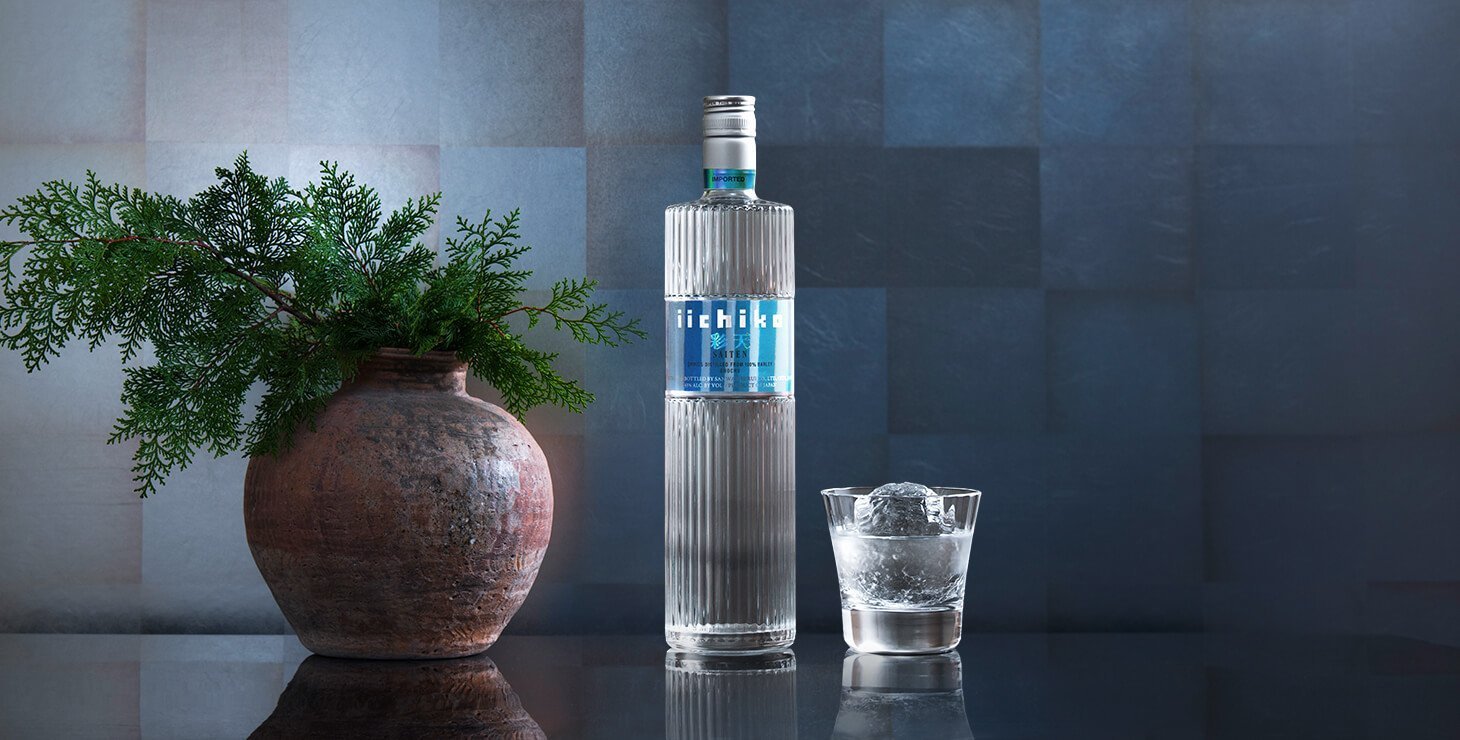
iichiko is a powerhouse brand whose visibility extends beyond the shochu industry. Its clout as an alcohol beverage is growing worldwide, especially as mixologists increasingly showcase its potential. Adventurous drinkers, too, are discovering its standalone appeal. Its producer, Sanwa Shurui in Oita Prefecture, added to the momentum in 2019 with a promising new brand from the same legacy: iichiko Saiten.
As company representatives tell us, “It was created as a product with distinct appeal that can break into the mainstream of distilled spirits worldwide and stand on equal footing among the best of them.” Those are high aspirations—some might say quixotic—but Sanwa Shurui’s trajectory and success so far inspire faith.
In the first issue of the Whisky and Spirits Journal of Japan, we touched on Sanwa Shurui in our feature on TUMUGI, an intriguing cocktail base spirits line the company launched in 2015. Sanwa Shurui also produces sake (Wakabotan), wine (Ajimu), and other spirits, but shochu remains its calling card.
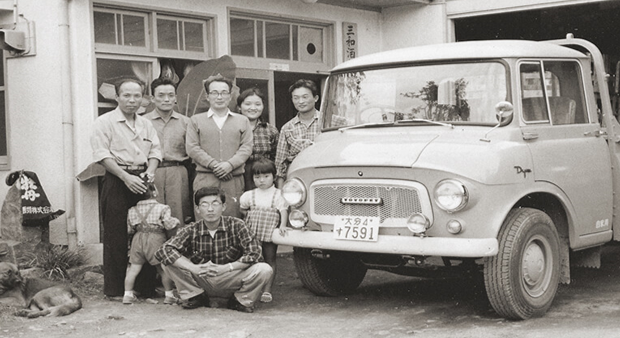
Let’s first review the company’s history before we delve deeper into its pursuit of global recognition. Sanwa Shurui formed in 1958 as three sake and shochu-making families in the small city of Usa entered a joint venture to build a bottling facility. Less than two years later, a fourth family joined, though the Sanwa Shurui name (meaning “three Japanese sake types”) remained unchanged. Two decades of operation then passed before its 1979 release of what would become the flagship brand, iichiko, roughly translated from the local dialect as “Isn’t this great?” For the company, it has been more than great.
In terms of overall shochu market share, iichiko is second nationally in Japan. For mugi (barley) shochu, it ranks first. Our own research indicates that the brand is the best-selling export shochu in the world and while company representatives say they are unable to confirm that for us, they do assert that they are the number one shochu import in the U.S., one of their most important overseas markets. Given the growing embrace of iichiko among the country’s food and beverage professionals, that’s easy to believe. Its other significant export destinations include Germany, Australia, Singapore, Vietnam, Taiwan, Hong Kong, China, England, Italy, and Canada—there are thirty countries in total.
An interesting note about Australia is that Sanwa Shurui also sources a significant amount of barley from the country. But the barley they proudly highlight is a local one grown in Oita called Nishi no Hoshi (Western Star). Typically, mugi shochu producers don’t simply use whatever barley is available. The preferred barley is two-row and typically demonstrates certain characteristics like large grains with ample starch that make it more amenable to good fermentation.
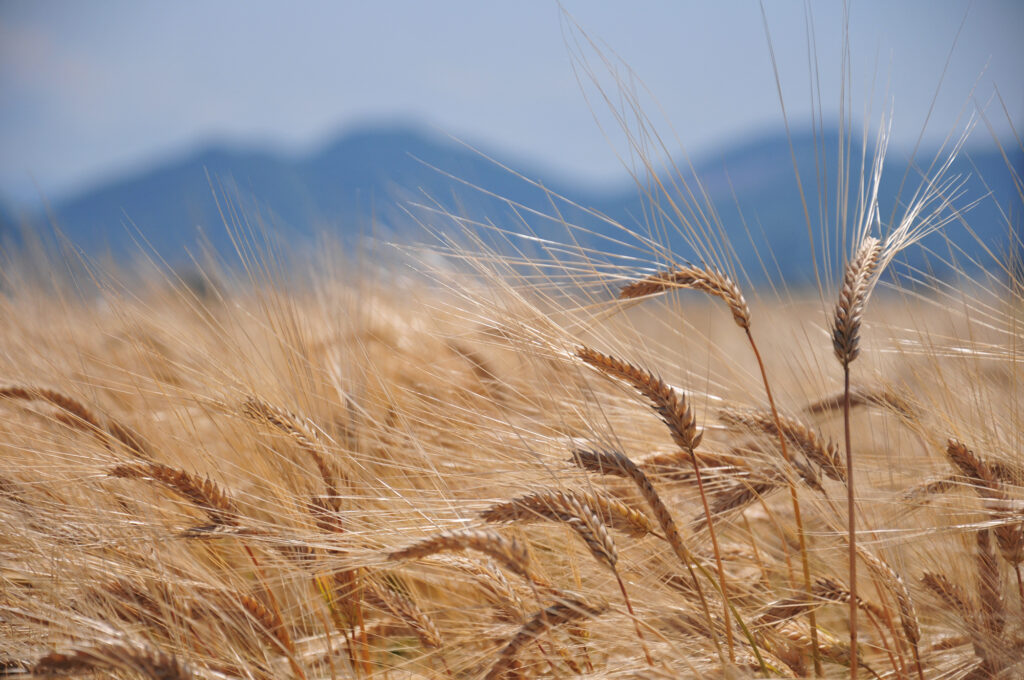
Barley is cultivated throughout Kyushu, but Oita is a key production area, along with Iki Island, off the coast of Nagasaki in the direction of Korea. Iki Island is actually small (138 square km/53 square miles); its claim to fame is more historical than one of volume. The island is considered the birthplace of mugi shochu, owing to draconian tax systems in the 17th century that left local farmers with little rice and plenty of exempt barley for food and liquid experimentation.
Most historians assert that distilling techniques arrived in Okinawa from mainland Asia in the 15th century and spread to Kagoshima in the 16th; however, there are some that also suggest distillation technology also came to Iki via the Korean Peninsula around 500 years ago—a plausible claim that the well-established Okinawa route could accommodate. Either way, mugi shochu production eventually spread to the larger island of Kyushu, home to Oita Prefecture.
The next major historical inflection point in mugi shochu’s history, going back to the 1970s, owes in fact to two Oita producers: Nikaido and Sanwa Shurui. In 1974, Nikaido launched a 100% mugi shochu line that generated considerable consumer enthusiasm until Sanwa Shurui followed suit. The industry as a whole widely credits these companies to a national shochu boom and an enduring change in shochu appreciation. For iichiko in particular, what led to its meteoric rise? The answer is partly shrouded in secrecy.
While Nikaido employed vacuum distillation for its shochu, iichiko further differentiated itself by using a blend of several several distillates. That convoy of four families, it turns out, had an unlocked destiny to fulfill. The thing is, their blending formula is a secret.
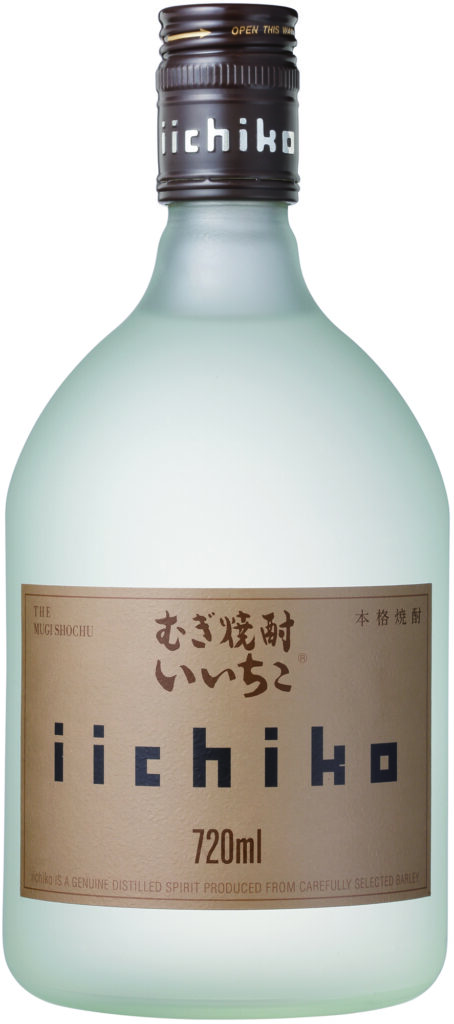
1979, when Sanwa Shurui burst onto the scene, was also a transitional year for shochu because of regulatory changes in the industry that introduced the official designation honkaku shochu. “Honkaku” gives the sense of “authentic” and the designation refers to traditional, single distillation shochu. It must use approved fermentation ingredients (there are more than fifty), be made with koji, and, following distillation in a pot still, have an alcohol by volume measuring 45% or less. Koji, for those unfamiliar, is a saccharifying ingredient. Yeast processes glucose to create alcohol, but barley (and rice) contains a lot of starch, rather than glucose, requiring conversion. Enter koji mold (aka Aspergillus oryzae), which is sprinkled on steamed rice or barley to kickstart the process. To return to our industry term, Sanwa Shurui’s iichiko is a honkaku shochu and the fortuitous timing of its release meant that in the minds of many it became synonymous with authentic shochu—a standard bearer, if you will, of this new category of a traditional Japanese beverage.
In the decades since, Sanwa Shurui has released quite a number of iichiko expressions. Some fairly recent ones in addition to Saiten include Silhouette, Frasco, and Kurobin. These expressions similarly use different blends of the company’s various mugi shochu recipes. While they employ 100% barley, the distillery facilities have introduced a broad range of flavor and aroma through experimentation with different stills, maturation techniques, fermentations, yeast strains, and more. As a result, iichiko has remained relevant and exciting, and certainly one of Japan’s most iconic brands.
iichiko’s Place in Popular Drinking Culture
These are the basic outlines of Sanwa Shurui’s history and how iichiko became etched in Japan’s popular drinking consciousness. For more insight on the thinking and culture behind the brand, we spoke at length with Tetsuro Miyazaki. While he’s currently Manager of the Global Marketing Division, he was previously the General Manager of iichiko in the U.S., where he spent many years helping propel the brand to popularity and witnessing firsthand its embrace by mixologists. Given shochu’s longevity in Japan, not to mention the contemporary popularity of brands like iichiko, it’s easy to assume that it’s good simply because it is.
When asked to give specific reasons why, Miyazaki explains,“The charm of honkaku shochu is, without a doubt, that it showcases the distinct character of its ingredients. Put another way, the differences between its various base ingredients—barley, rice, sweet potatoes, and brown sugar, among others—find rich expression in the flavor, allowing you to savor the unique taste and aroma of each.”
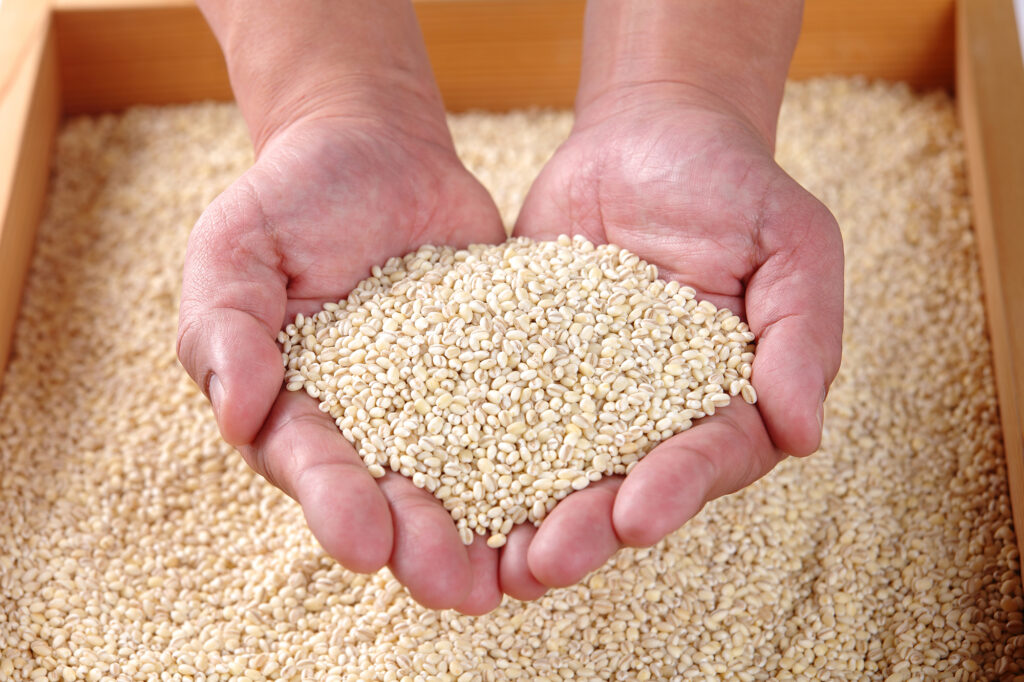
Miyazaki also highlights the use of koji in this distilled beverage. It’s a component that’s perhaps too often overlooked outside of its role in the production process itself.
“Koji, which thrives in Japan’s environment, is essential to the fermentation process, lending distinctive depth and umami to the drink. Through koji’s properties, we get multiple parallel fermentation, whereby saccharification and fermentation happen simultaneously. The resulting alcohol content after fermentation reaches roughly 18%, which is on the higher end. The alcohol content of the fermented mash of other spirits—including most whiskies, for example—typically tops out at 10%. That’s why multiple rounds of distillation are necessary, whereas authentic shochu is produced via a single distillation. That allows more of the flavor and aroma of the original ingredients to remain in the liquid. In the end you naturally have more depth of flavor.”
The reference to Japan’s “environment” is an interesting one. The corresponding word, fudo, references the climate, the soil, water qualities, and other variables. It gives the sense of terroir, to use the common wine term, whereby characteristics of all these things are reflected in the flavor and are unique to the locale. There’s some mild controversy over use of the term in the context of sake or shochu. If the raw materials (like rice or barley) are imported from some other region, then the flavor isn’t totally representative of the terroir, but sake and schochu producers alike will often make an effort to source and produce locally, in part or whole. Sanwa Shurui certainly leans into this with use of its local barley, and the production of its koji and distillates locally.
Honkaku shochu thus often reflects the local environment and culture—the agricultural traditions and distilling techniques that developed there. You are literally tasting, in Yamazaki’s words, “the personality of the land.” Shochu isn’t simply an alcoholic beverage, but a liquid museum of Japan’s intangible culture and natural riches. As a classic representative of honkaku shochu, iichiko gained footholds in overseas markets as noted above, but Sanwa Shurui of course wanted to push further.
Miyazaki notes, “Shochu has mainly been a drink enjoyed together with meals, particularly at izakaya. Our iichiko Saiten brand sought to evolve from there and expand into new markets. We conceived of it as a beverage that can compare with other top spirits around the world, gaining favor in the mainstream through its own unique appeal.”
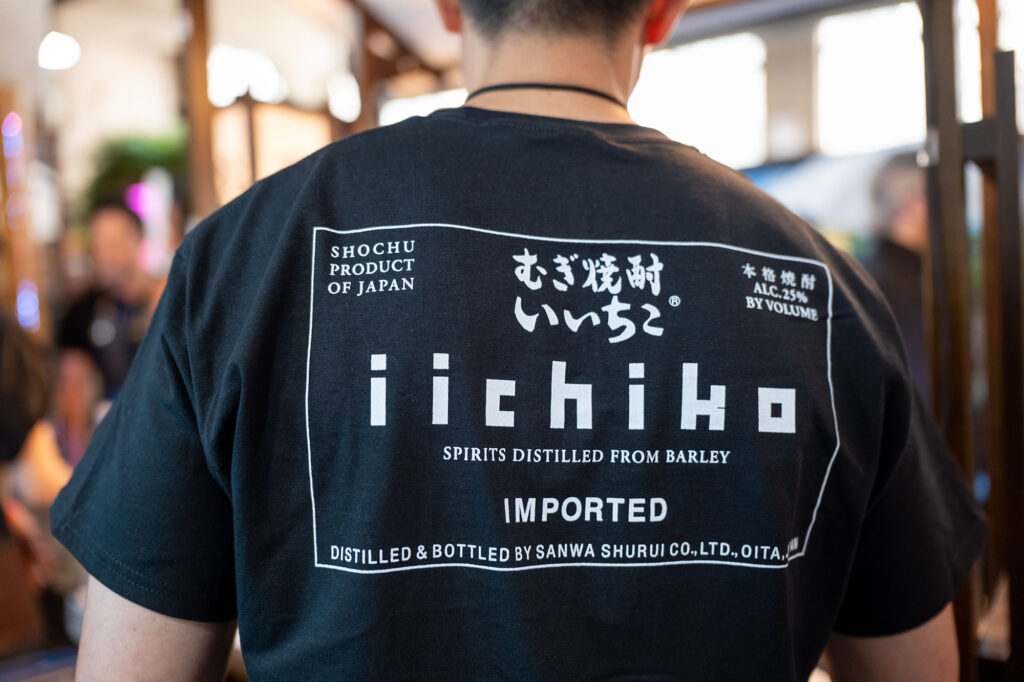
The realization that such a brand would be key to their aspirations came in part through their market activity in the U.S. According to Miyazaki, during his time as GM in the U.S., they focused their sales efforts on izakaya and Japanese-style restaurants, but soon realized that drinking culture was quite different from Japan’s.
“In Japan, people enjoy just about anything with their meals—sake, shochu, whisky, highballs, gin highballs, umeshu, and beer,” says Miyazaki. “But in the U.S., the types of drinks consumers typically enjoy with their mails are brewed, like wine, beer, or maybe sake. Well, shochu is distilled so it’s categorized with other spirits. In the U.S., those are more often consumed in bars, not at restaurants with meals.”
The conclusion they came to, of course, was that they should endeavor to introduce iichiko to the bar scene, and that this could more effectively alter the course of shochu internationally as well. Sanwa Shurui then formed a product team and made numerous market visits to the U.S., some of which included the company president (we can’t blame him for wanting to see the bar scene firsthand). As an interesting side note, the presidency of Sanwa Shurui rotates among the four families that established the company.
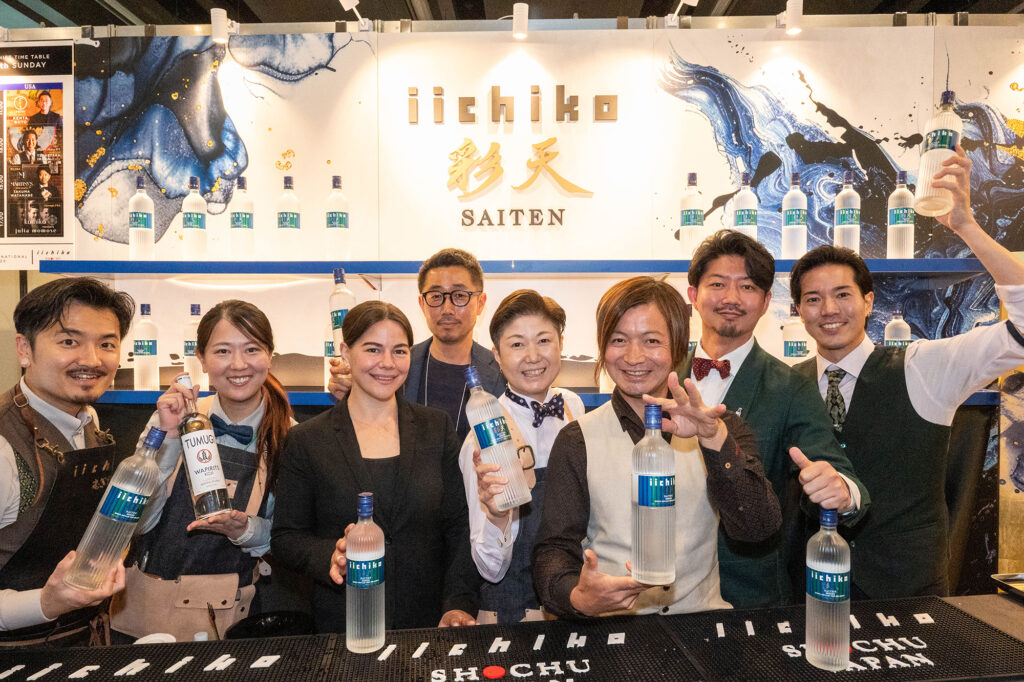
For their market research, the team invited top bartenders from across the U.S. to participate in multiple tasting sessions of their prototype products. Their feedback was valuable and thus incorporated into subsequent iterations. The final result was an iichiko expression that proudly exemplified Japan’s koji-based distillation tradition while at the same time demonstrating character that shined in cocktails.
The cultural differences the team noticed when they began the Saiten journey became even more nuanced as time passed. In Japan, lower-alcohol cocktails are more common, while in the U.S., they discovered that cocktails were both stronger and more robust in flavor—an aspect of drinking culture that generated considerable interest among the team. This encouraged them to develop an iichiko expression that could assert itself even against that flavor backdrop.
Traditional shochu ranges from 20% to 25% alcohol content, but iichiko Saiten is a whopping 43%. So that the umami of the koji would be fully expressed, they very consciously made a barley koji for a 100% koji mash. This is the zen-koji (literally, “complete koji”) brewing method, touched on originally in our article on TUMUGI.
Miyazaki explains, “The base spirit is distilled at atmospheric pressure to extract rich, roasted notes in the aroma. We also carefully selected a yeast strain that is well suited for each individual base spirit. Through our blending of these distinctive base spirits, we achieved a rich flavor profile with considerable depth.”
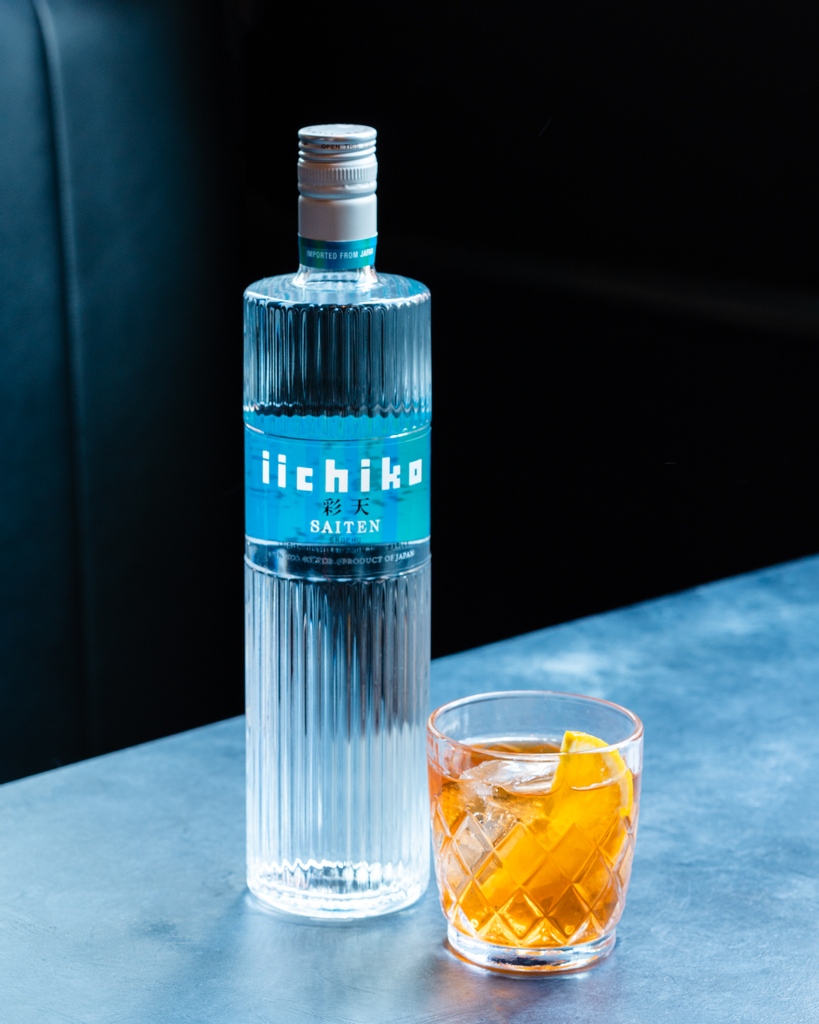
Although iichiko Saiten is leading the charge right now, Miyazaki hopes that top bartenders around the world more broadly discover and experience the excellence of honkaku shochu. In the world of wine, he notes, sommeliers tend to be the trend-setters, but with spirits, it’s the mixologists who are innovating and creating the culture. And through them, consumers will hopefully discover iichiko Saiten. Imagine for a moment honkaku shochu on bar shelves around the world, as common as whisky, rum, gin, or vodka. That’s the goal.
The striking bottle design, according to Miyazaki, was inspired by the image of a Japanese woman in a kimono. The label design is reminiscent of the obi (sash) of a kimono. Their goal was to express “Japanese beauty” that merged aspects of traditional aesthetics with contemporary taste such that it would additionally stand out when displayed.
Besides feedback from those initial tasting sessions with mixologists when Sanwa Shurui was developing Saiten, other bartenders have commented on its unique flavor. It is quite distinct from other spirits and distilled beverages due to the umami that derives from koji. In cocktails—at least many of the recipes developed so far—it yields a smooth, rounded aftertaste and lingering finish. It’s also grain-forward, which long-time fans of Sanwa Shurui’s products note is somewhat unusual.
Most of Sanwa Shurui’s export markets have had to wait for iichiko Saiten. In addition to the U.S., it has only been available in select markets like Singapore, Hong Kong, and Australia. As of this summer, it is also finally available in Japan following several launch events in Fukuoka, Osaka, and Tokyo where bartenders brought in from around the world unveiled their creations to lucky guests.
Miyazaki notes, “We hope that iichiko Saiten will be enjoyed in bars, as it is in the U.S. and our other overseas markets. While honkaku shochu has not been traditionally served in Japanese bars, there is a growing trend among younger bartenders in particular of creating cocktails with it. We want people to recognize that shochu is not only delicious, but can make for a classy drink in the cocktail world, too. We want bartenders to see honkaku shochu as a Japanese spirit they can be proud of.”
Given the star power of the bartenders in attendance, including Shingo Gokan (whom we featured in our first issue), it seems like only a matter of time before this company ambition is realized. Just as 1979 marked a watershed moment in the company’s history, could 2025 become yet another? Consumers will determine that and the buzz from the launch events indicate that possibility grows with every Saiten cocktail enjoyed. Time to enjoy (or create) your own!